
Declining OTA profitability has become an open topic in the industry. There are many reasons, but two stand out: hotels are winning more direct bookings, and Google Hotels keeps growing its metasearch dominance.
Today we're looking at the expansion of hotel loyalty programs and Google's sustained influence — both of which drive direct bookings.
Think about how you choose an airline. First you compare schedules and prices. Then you check whether you can earn (or redeem) miles.
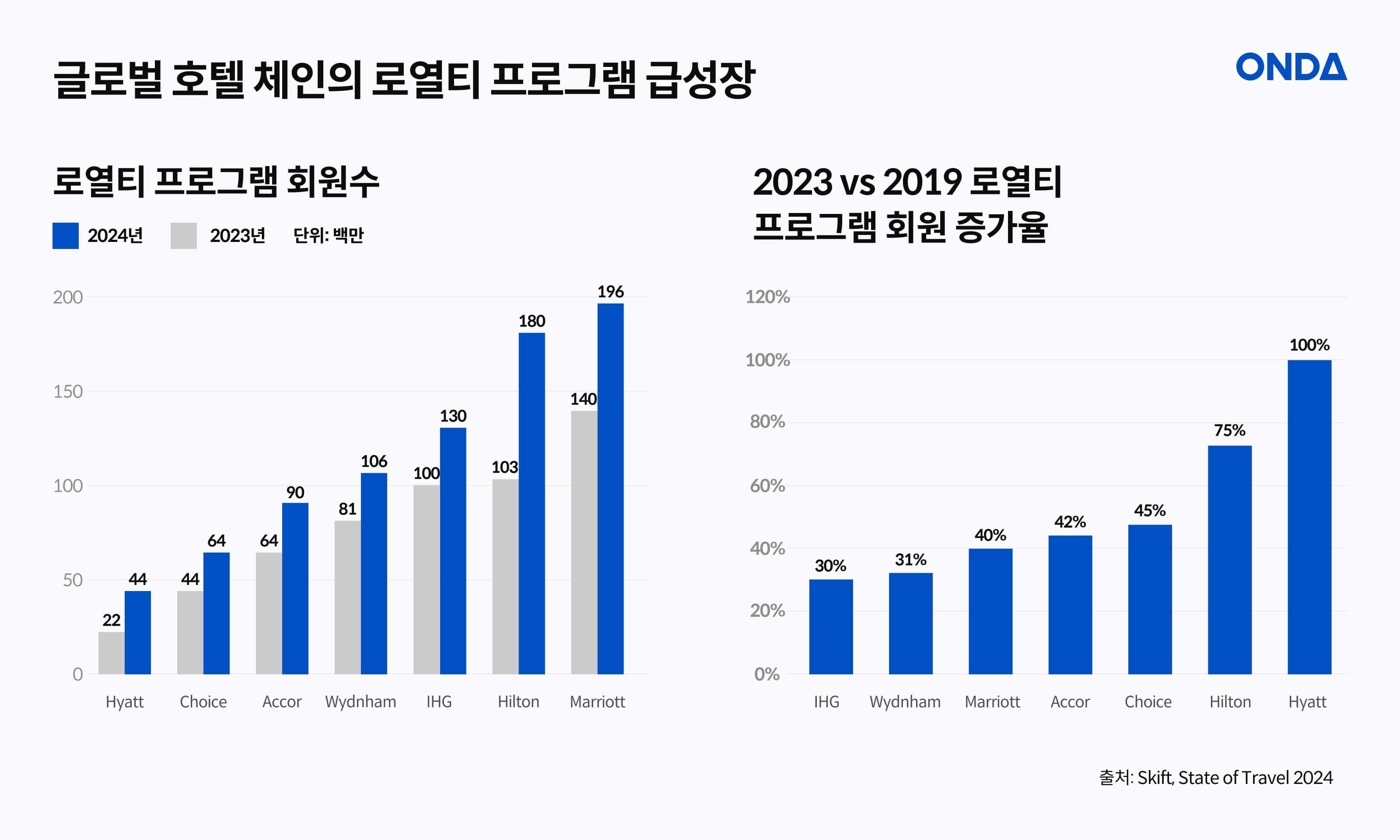
Major hotel chains are making their loyalty programs work more like airline miles. And coming out of the pandemic, membership numbers have surged.
Marriott grew its program by over 40% from 2019 levels to 196 million members. Hilton went from 100 million to 180 million.
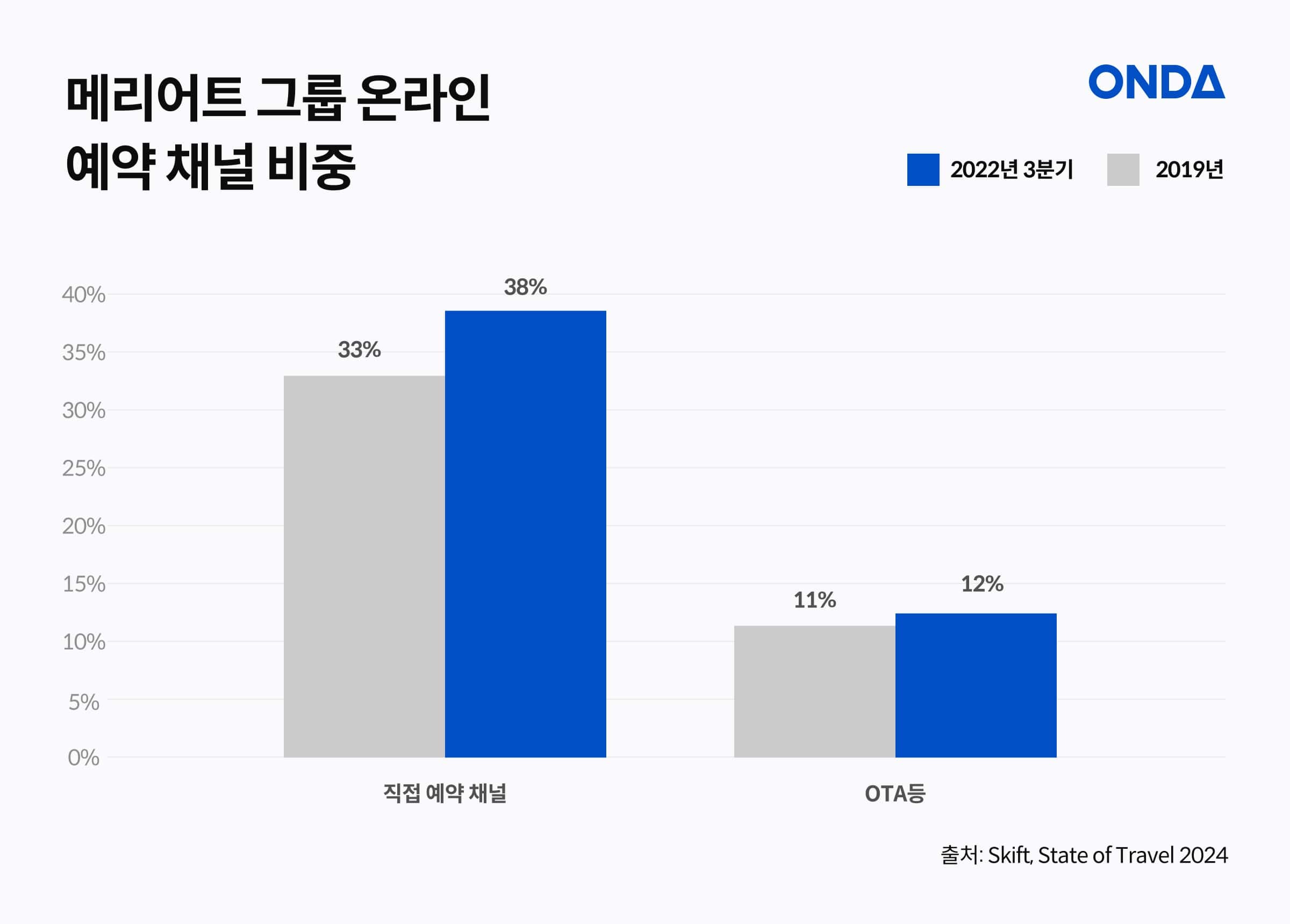
According to the report, loyalty programs and brand strength are strongly correlated with online direct bookings through hotel websites. Marriott's direct website bookings grew from 33% in 2019 to 38% by Q2 2022.
So where are these direct bookings coming from? In international markets — it's Google.
According to State of Travel, Google has been the largest online accommodation advertising platform since 2017. And Google Hotels' return on ad spend (ROAS) has consistently been at its highest since 2017 as well.
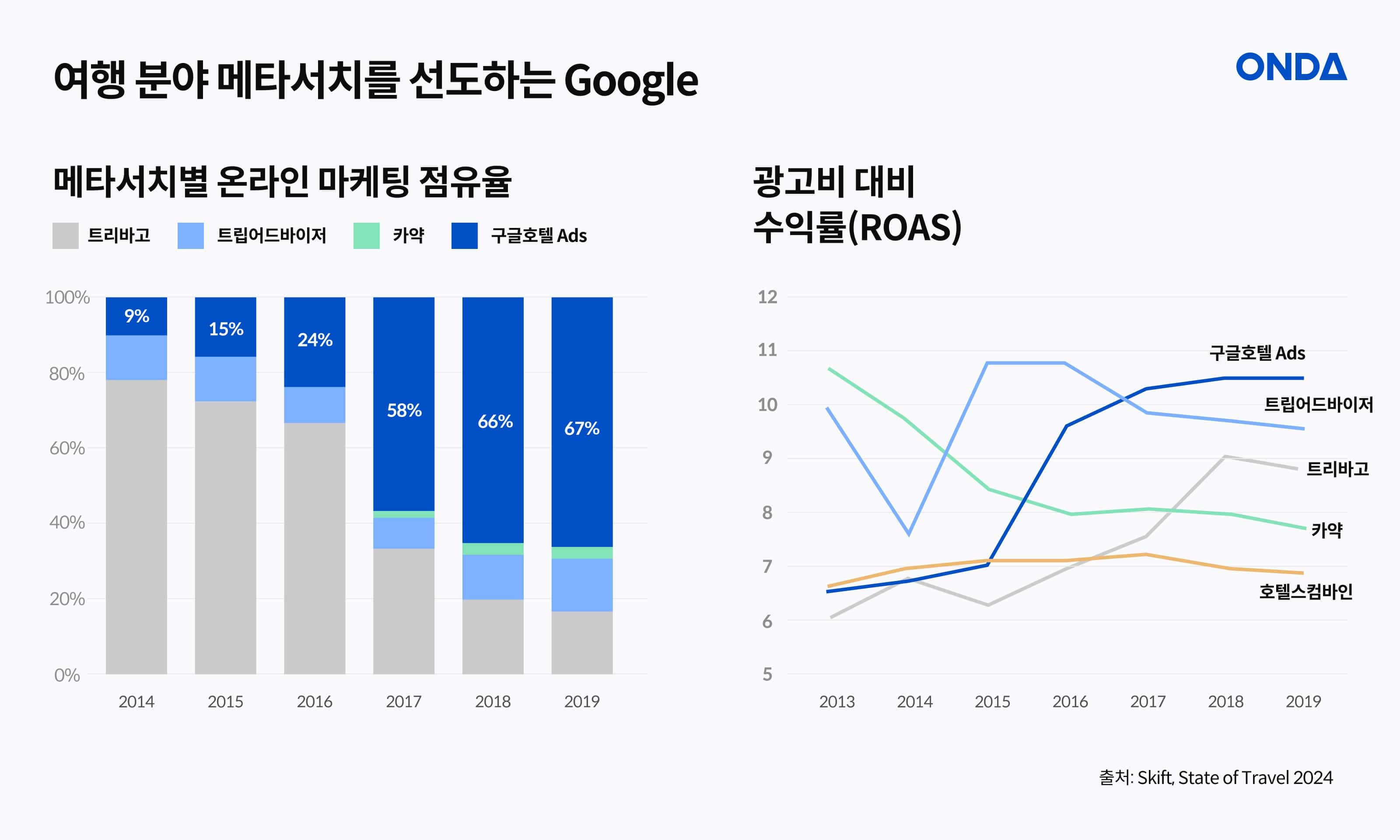
We've covered Google Hotels in detail on the ONDA blog. If you're trying to attract international guests directly, it's one of the most efficient advertising and search channels — and getting better.
Google Hotels is also where major OTAs spend the most. And as competition intensifies, their ad efficiency keeps declining.
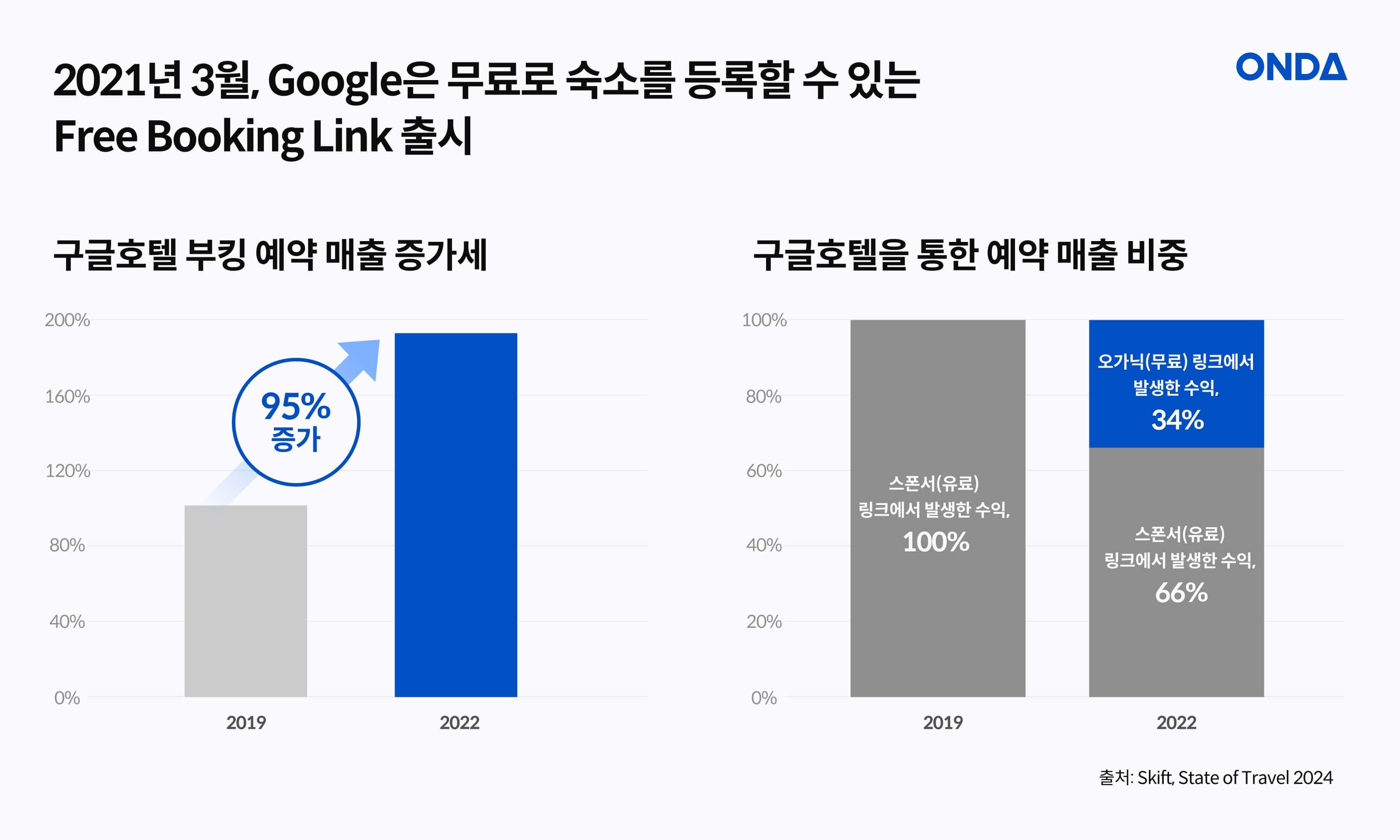
One reason OTA profitability is slipping: on Google — the world's largest ad platform — OTAs and independent hotels now compete on equal footing :)
What we've covered today is just a sliver of Skift's State of Travel 2024. It's packed with insight into the online travel ecosystem and global market trends. The full report is over 400 pages, but if you work in online travel, it's worth the read.