15. Single-Origin and Blended Herbal Teas
Writer: Lim Eun-hye, Tea Sommelier (Brand Manager, Tea Grace)
Editor: Somora, ONDA


About the Writer Lim Eun-hye
- Tea Sommelier Research Institute Gold Course graduate
- Beverage menu consultant for franchise and independent cafés
- Tea product development consultant
- Milk tea and tea-ade one-day classes and corporate workshops
- Runs an online store and publishes tea columns on blog and MAGAZINE ON
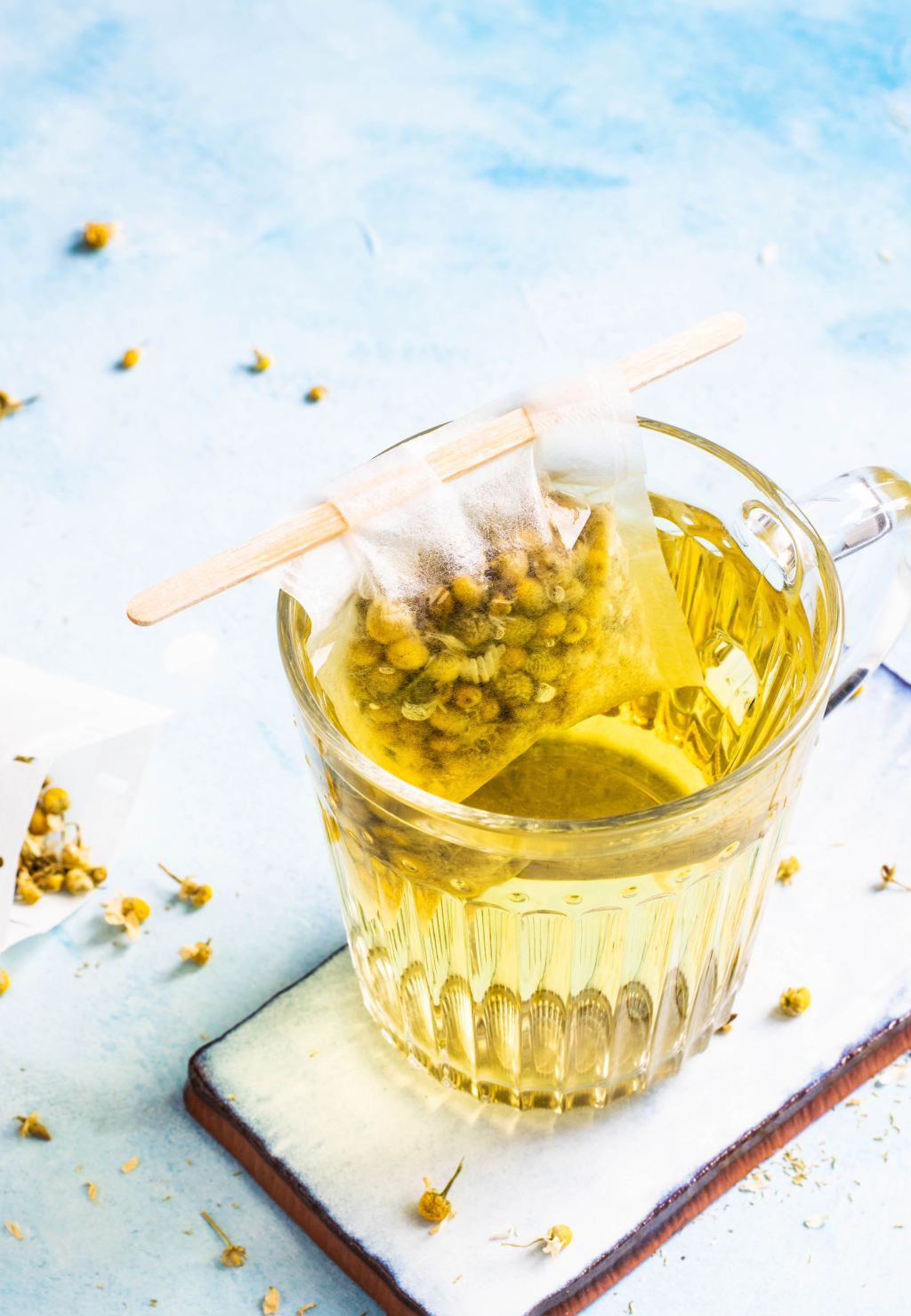
Photo by Monika Grabkowska on Unsplash
Hello, MAGAZINE ON subscribers. Tea Sommelier Tea Grace here. Seoul had its first snow a few days ago, and the temperature has dropped with it. Year-end parties and events are just around the corner — please watch out for colds and overindulgence.
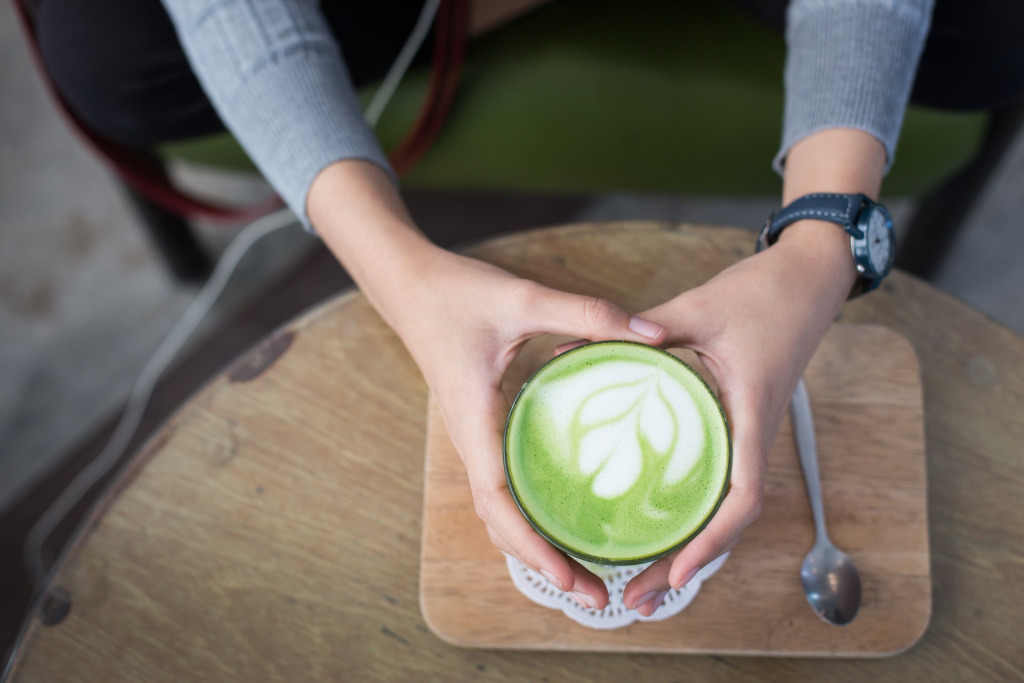
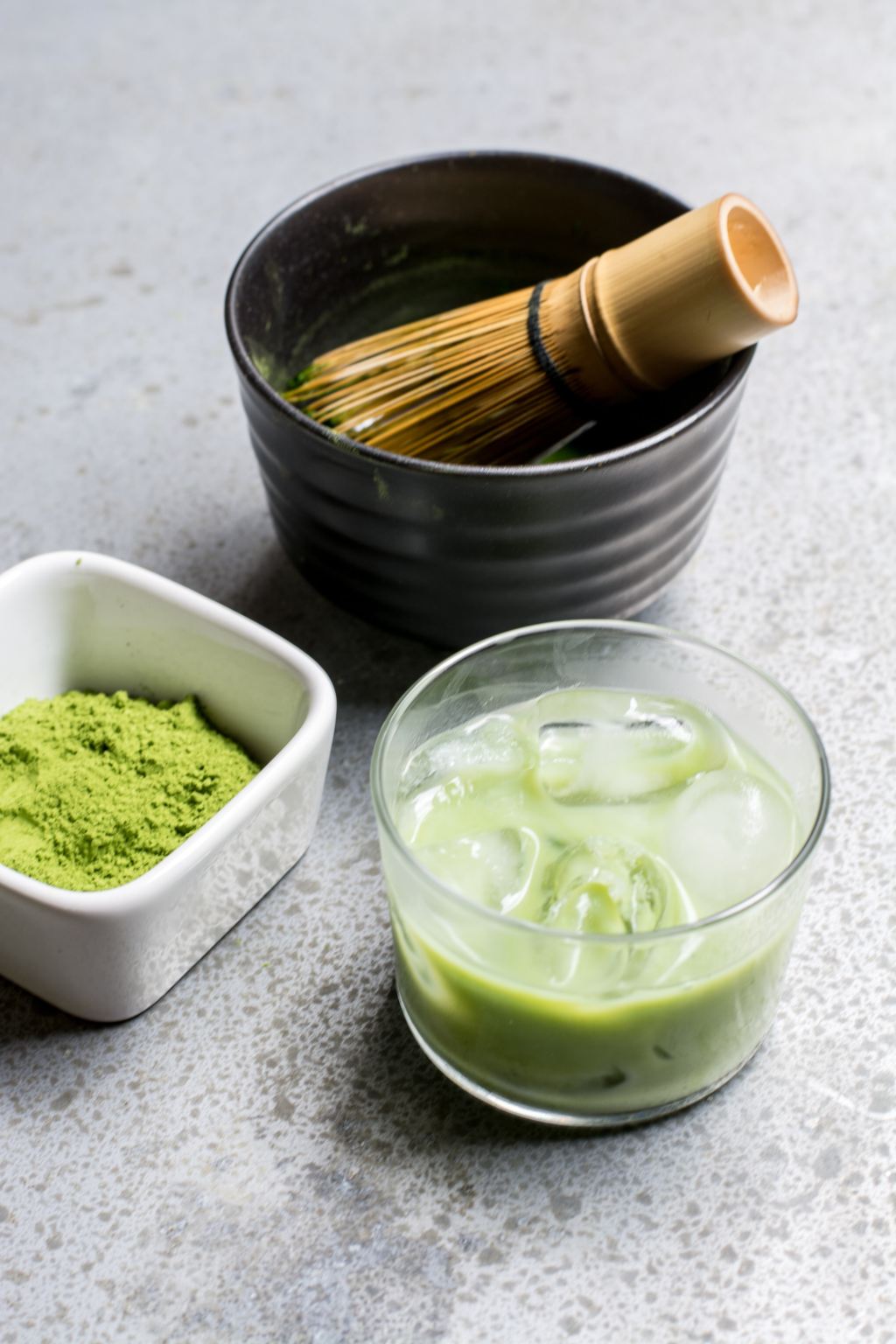
Last month, we wrapped up our green tea series with brewing techniques for green tea and matcha, creative applications, and a roundup of cafés famous for their matcha drinks and desserts.
Starting this month, we're diving into herbal teas. Today's piece kicks off the series by introducing single-origin herbal teas and blended herbal teas.
What Is an Herb?
An herb is a plant used medicinally, valued for its fragrance, and employed in cooking — vegetables and spices alike. Herbs primarily grow in Europe, the Mediterranean, and Southwest Asia, and Korean tea companies import them. Familiar examples include chamomile, peppermint, lemongrass, thyme, and basil.
Here's a fun fact: scallions, garlic, and chili peppers — Korean cooking staples — are technically herbs. So are mugwort and cassia seeds, used in traditional folk remedies. Think of them as Korea's native herbs.
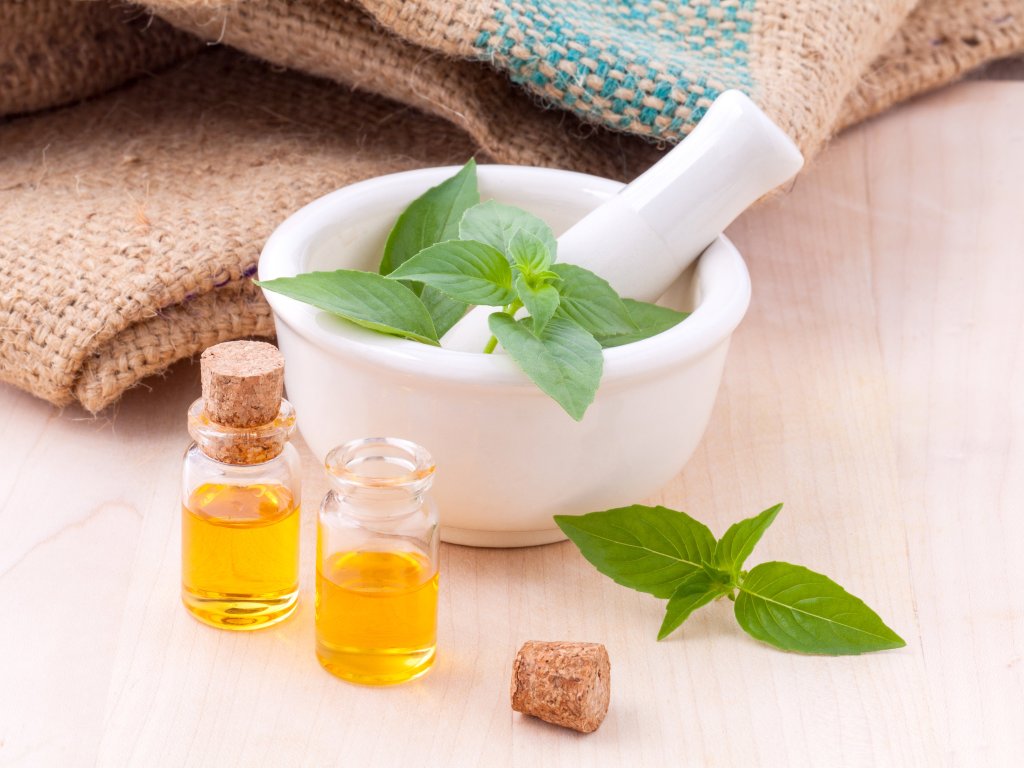
Plants used medicinally, prized for aroma, and deployed in cooking: herbs
Types of Herbs and How to Use Them
Herbs can be brewed into tea, blended into cosmetics, used as spices, or eaten as vegetables. Let's start with everyone's favorite: chamomile.
Chamomile
Chamomile is virtually caffeine-free, so you can enjoy it late at night without worry. It warms the body, soothes the nerves, and helps with insomnia. Its pale yellow infusion is beautiful. Try it as a warm fruit tea with citron syrup, or serve it iced on a hot day.
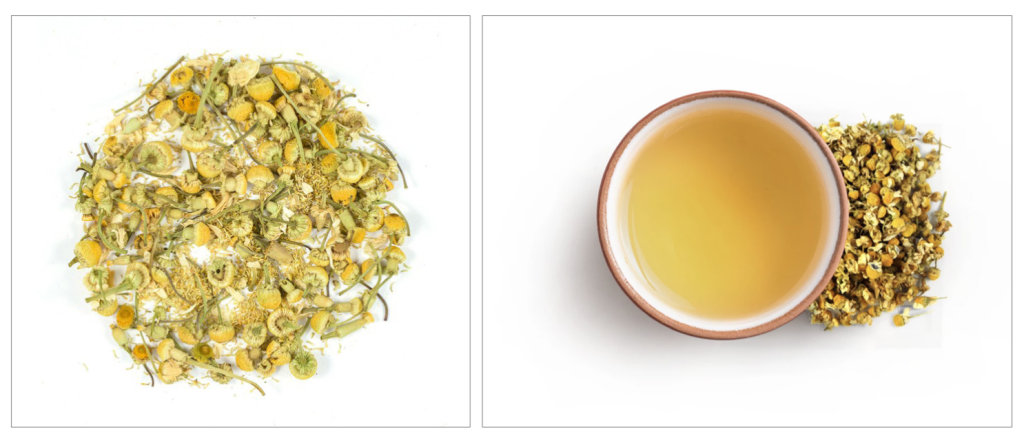
Chamomile: calms, warms, and helps you sleep
Rose Chamomile
Now, take chamomile and blend it with hibiscus, rose, and lemongrass — you get Rose Chamomile.
Rose Chamomile is a bewitching ruby-hued blend. Hibiscus, supposedly Cleopatra's favorite, is loaded with vitamin C. The sweet apple-like aroma of Rose Chamomile pairs beautifully with lemon syrup, whether served hot as a fruit tea or chilled as a tea-ade.
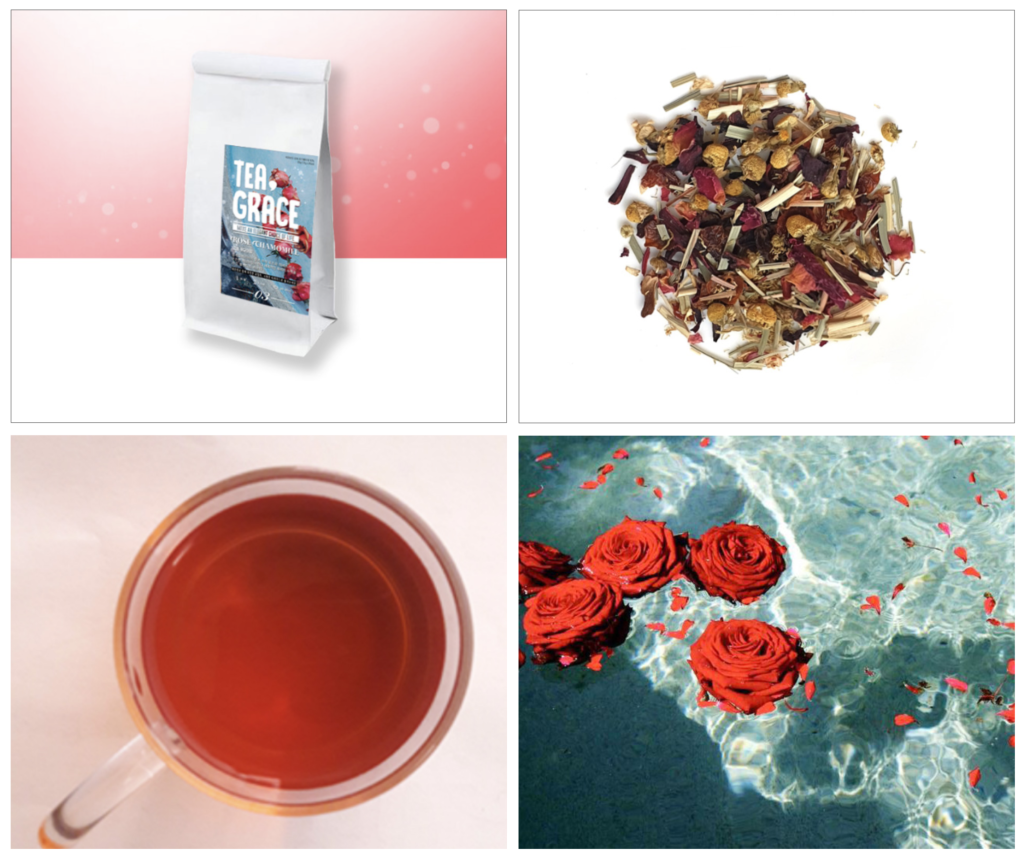
Rose Chamomile: hibiscus meets chamomile in a ruby-red blend
Single-Origin vs. Blended Herbal Teas
A tea made from one herb — like pure chamomile — is called a single-origin herbal tea. A tea that combines multiple herbs — like Rose Chamomile — is a blended herbal tea. Just as coffee roasters blend beans from Brazil, Guatemala, and Kenya, most teas gaining traction today are blends, not single-origin.
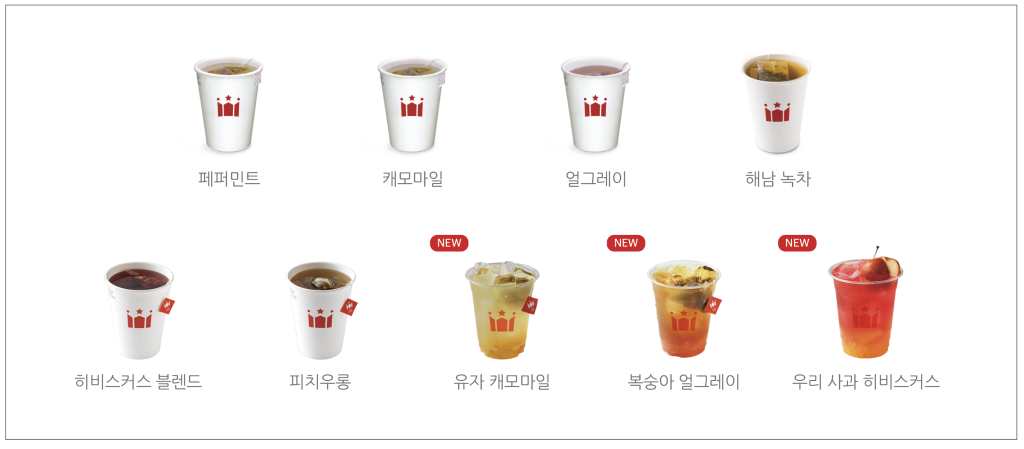
Modern café menus feature blended teas and fruit syrups — more variety, stronger sales (Source: https://www.hollys.co.kr/menu/signature.do)
Look at the franchise café menu above. It's evolved. A few years ago, menus listed single-origin teas: chamomile, peppermint, Darjeeling. Today, you see blends and variations with fruit syrups — driving both variety and sales.
That's a wrap on single-origin vs. blended herbal teas, with a quick intro to popular varieties. Next month, we'll cover the health benefits of herbal teas and how to make them taste incredible. Wishing all MAGAZINE ON subscribers a joyful holiday season and a warm end to the year.
[Series Index]
Sep 2018: Understanding Tea and Differentiating Your Property
Oct 2018: Blended Teas and Why You Should Drink Them
Nov 2018: Black Tea Stories (1)
Dec 2018: Black Tea Stories (2)
Jan 2019: Black Tea Stories (3)
Feb 2019: Black Tea Stories (4)
Mar 2019: Hiatus
Apr 2019: Black Tea Stories (4) – 2
May 2019: Black Tea Stories (4) – 3
Jun 2019: Black Tea Stories (5)
Jul 2019: Black Tea Stories (6)
Aug 2019: Green Tea Stories (1)
Sep 2019: Green Tea Stories (2)
Oct 2019: Green Tea Stories (3)
Nov 2019: Green Tea Stories (4)
Dec 2019: Herbal Tea Stories (1)
Jan 2020: Herbal Tea Stories (2)
Feb 2020: Herbal Tea Stories (3)
Mar 2020: Herbal Tea Stories (4)
Apr 2020: Herbal Tea Stories (5)
May 2020~: Fruit Tea Stories