TL;DR
- April 2026: international fuel surcharges jumped from tier 6 to tier 18. Families are scrapping overseas trips and booking domestic pensions, pool villas and private guesthouses instead. Inbound tourism is climbing. Seoul hotels face a supply crunch through 2029.
- We saw the same balloon inflate during COVID. Private villas took off, then backyard kiddie-pool pensions filled up. Outside capital rushed in to build pool villas — then endemic recovery arrived just as supply flooded the market and prices collapsed.
- The operators who got hurt worst were owner-operators who ramped up fixed costs during the boom. The riskiest move you can make today is the same one: betting fixed costs on short-term demand.
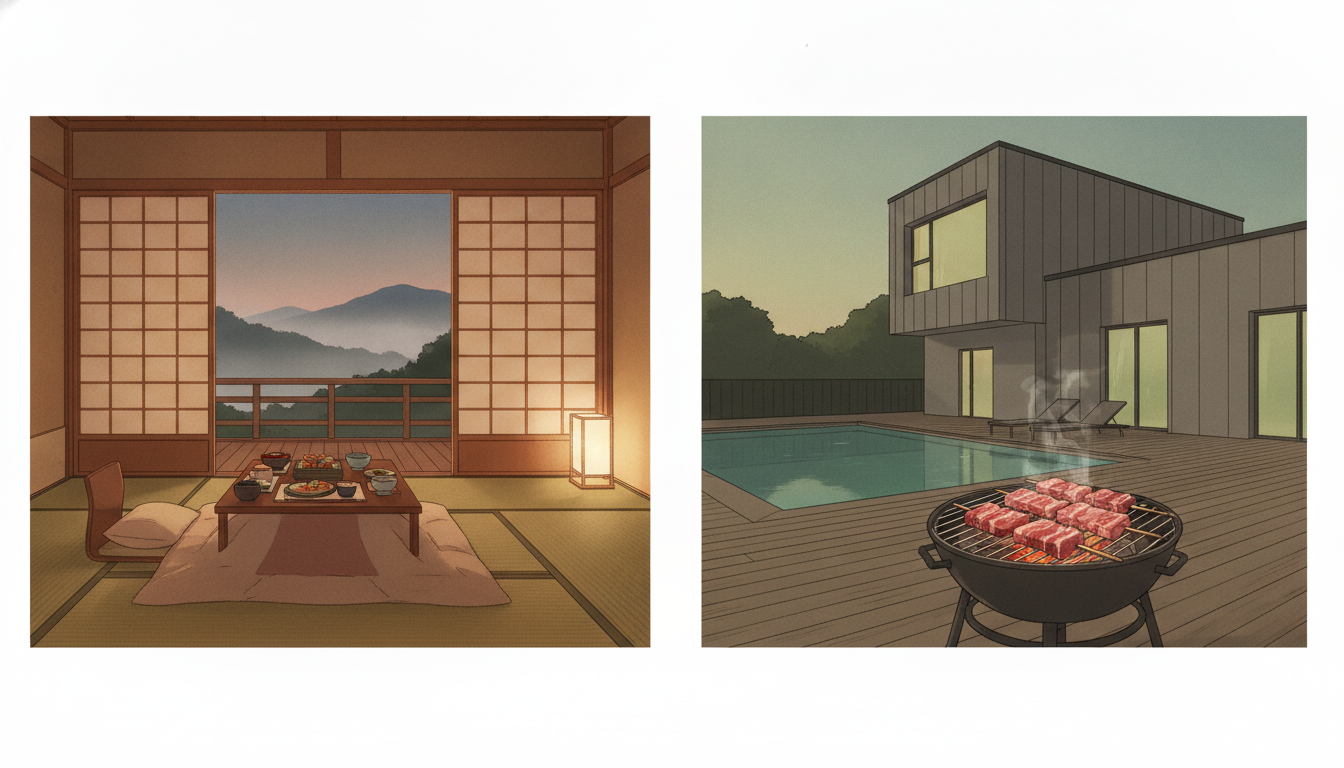
April 2026. The balloon is inflating again — this time behind spiking oil prices. Middle East instability sent crude on a rollercoaster. Korean Air's international fuel surcharges shot from tier 6 in March to tier 18 in April[1], adding ₩303,000 one-way to U.S. East Coast routes[2]. Asia–Europe fares are forecast up more than 30% year-on-year[3]. A family of four flying return to the U.S. East Coast now pays ₩2.4 million in fuel surcharges alone — total airfare easily tops ₩10 million. That buys a week at a Jeju pool villa with three meals a day out, and change left over.
Families who put the overseas trip on hold are quietly typing new search terms: Korea pensions. Jeju pool villa. Gangwon-do private guesthouse. This scene feels familiar.
Three corners of the balloon pressed at once
The balloon effect is simple. Press one side and the other swells. In travel markets the principle repeats with clockwork precision. Middle East tension, oil spikes, soaring airfares — outbound demand flows back into Korea.
Inbound tourists are flooding in too. Korea Tourism Organization data show 18.94 million foreign arrivals in 2025 — an all-time high[4] — and 4.76 million in Q1 2026 alone, up 23% year-on-year[5]. Mastern Investment Management reports Seoul hotel ADR averaged ₩198,000 in 2024, up 58% from 2019[6]. Genstarmate data show three-star ADR hit ₩162,000 in November 2024 — up 85% from 2019[7]. Yet hotels take roughly five years from permit to ribbon-cutting. Shinhan Investment Securities expects Seoul's room shortage to run through 2029[8]. Demand is exploding while supply sits still, so domestic guests priced out of Seoul spill into Gyeonggi-do, Gangwon-do and the provinces.
When Seoul gets expensive, provincial hotels boom. When hotels get expensive, pensions boom. When pensions get expensive, guesthouses become trendy.
Three corners of the balloon are pressed at once. My property will obviously ride the wave.
But this isn't the first time
The last cycle I watched from the front lines went like this:
Chapter 1. Freeze
Early 2020. COVID arrived and the whole market froze. A novel virus nobody understood — nobody left the house. Guest traffic vanished across every property type. The industry started cutting staff and costs.
Chapter 2. Private villas rise
The frozen market thawed first for private-unit properties. Bookings came back to pool villas and standalone pensions where families could rest without human contact. Households that used to take kids abroad opened their wallets even when nightly rates matched the cost of an overseas trip — as long as infection risk stayed low.
Chapter 3. The era of the backyard basin
Private villas heated up, so prices climbed. Weeknight ₩500,000 pool villas became common. Families who used to take the kids out every weekend couldn't afford it anymore. They turned to old pensions with a big basin in the yard.
All the kids needed was a splash pool. Decades-old pensions dropped a basin or inflatable pool in the yard — nothing else changed — and bookings surged. The balloon effect reached the last corner of the market.
Chapter 4. Birth of the 'ho-cance'
Seoul's upscale hotels faced a different problem. Properties with heavy foreign-guest exposure took the hardest hit. To survive, hotels slashed rates and bundled breakfast, rooms and amenities into packages priced for younger travelers with less disposable income than the middle-aged cohort.
This era popularized ho-cance — hotel + vacance (Korean for 'vacation'). The portmanteau existed pre-COVID, but hotels shifted positioning to survive and consumers piled in, turning it into a real travel category.
Chapter 5. Construction firms enter
News that even backyard-basin pensions were fully booked drew outside capital. Builders and developers started putting up pool villas across the country — Gangwon-do, Jeju, Gapyeong, Gyeonggi outskirts, Namhae, Tongyeong. Individual owners kept pace, taking out loans to expand, renovate, hire staff and raise prices.
Everyone believed the demand surge would last forever. Supply grew.
Chapter 6. Pop
After nearly two years, the endemic declaration came and overseas travel reopened. That moment coincided with the completion of pool villas started in early COVID — supply flooded the market just as demand dropped.
The result was predictable. Vacancies rose. ADR fell. Discount wars broke out. Owner-operators who had ramped up fixed costs during the boom found themselves in serious cash crunches when bookings dried up.
The hardest hit weren't the construction firms with deep pockets. Professional capital could absorb losses and exit. But individual owners who borrowed heavily to invest took the losses hardest — and many are still limping along today carrying that damage.
The order the balloon pops
External shock → outbound demand shifts domestic → private villas and pensions surge → budget alternatives catch the wave → outside capital enters → supply floods → demand normalizes → prices collapse
The critical event is "supply floods." Hot demand naturally draws new supply, but supply takes time to build — easy to miss the timing. And once you've added supply, cutting it back turns directly into loss, so it stays in the market dividing up scarce demand for a long time.
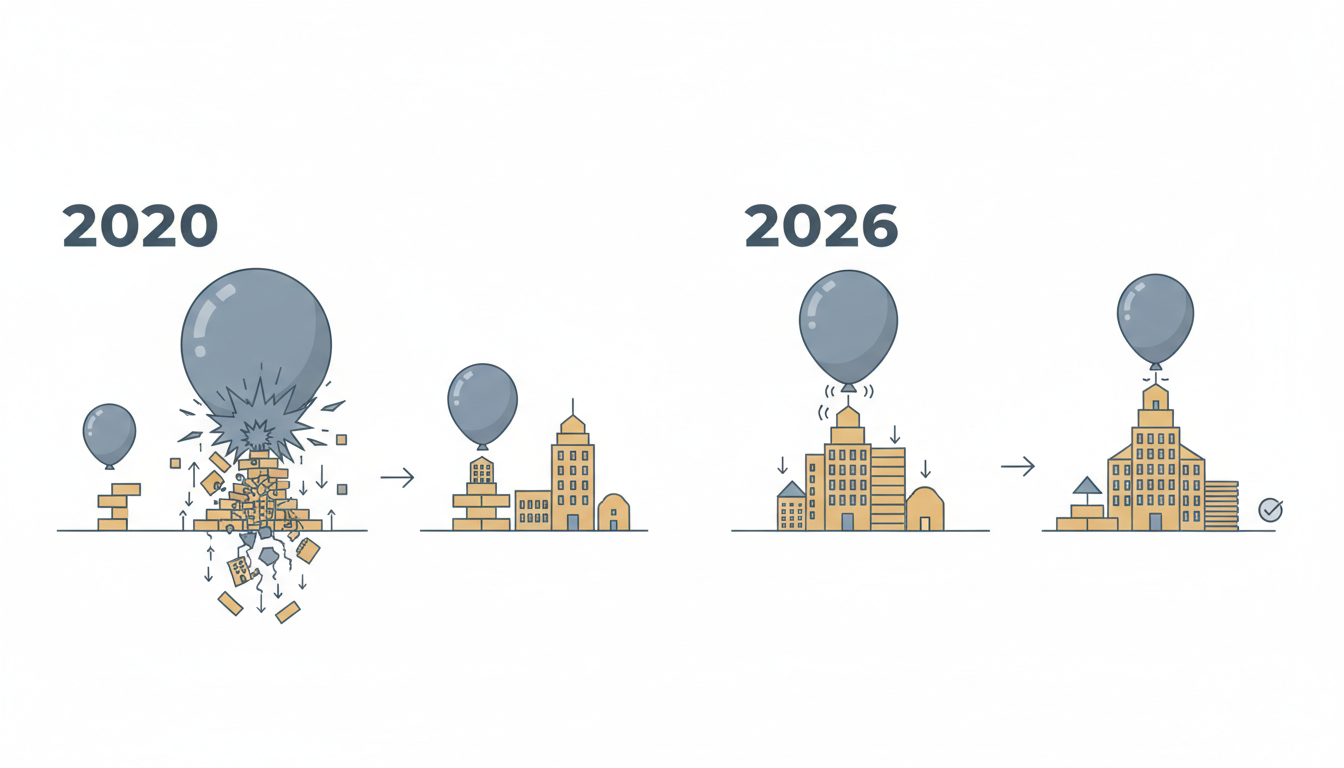
Will this balloon be different? This time we start with oversupply left over from the last cycle, so the pattern may diverge. Demand shift gets absorbed by existing inventory first — the balloon may not swell as large. Still, how you operate through the uptick will determine wildly different outcomes.
In front of the balloon
I'm not here to tell you "now is the time to invest." After 18 years watching the hospitality business, I'll say this: the riskiest move you can make today is betting fixed costs on short-term demand.
Sudden demand surges pop like balloons. The question isn't when it pops — it's where you are when it does.
The pool villa you build today may finish right when the balloon bursts. The staff you hire today won't cost less when bookings drop and ADR falls. The OTA dependency you raise today — taking one more booking at any cost — comes back as commission drag and ad spend when the balloon pops and you need to cut costs.
We all watched what happened in 2023 to people who believed in 2020 that "this demand is permanent." Not standing in that spot again is the single most important principle for navigating this uptick.
The balloon is being pressed in multiple places at once. Opportunity is real. I'll cover the playbook — grounded in 18 years in the field — in Part 2.
「Korea Hospitality Balloon Effect」 series
- Part 1: Fuel surcharges spike — what happens to your property next (this post)
- Part 2: Five rules for properties that survive the pop
References
- Financial News, "Fuel surcharges forecast to rise ₩300,000 in April — March bookings expected to surge" (2026.3.18) · fnnews.com
- Newsis, "Korean Air April fuel surcharges up as much as 247% — tops ₩300,000" (2026.3.16) · mobile.newsis.com
- Hankyung, "Soaring airfares — Asia–Europe routes jump up to 560%" (2026.3.26) · hankyung.com
- Korea Tourism Organization, "Korea Tourism Statistics for December 2025" (2026.1.30) · datalab.visitkorea.or.kr
- Ministry of Culture, Sports and Tourism, "Q1 2026 foreign arrivals break 4.76 million — record high for first quarter" (2026.4.16) · mcst.go.kr
- Mastern Investment Management, "Mastern Insights No.2 — Seoul hotel market diagnosis post-pandemic" (2025.9.24) · mastern.co.kr
- Genstarmate, "[ISSUE CHECK] 2024 hotel market GMV hits ₩2 trillion, recovers to pre-COVID levels" (2025.6.13) · blog.genstarmate.com
- Asia Economy, "'Nowhere near enough' — K-wave pulls foreign tourists but Seoul hotels short through 2029" (2026.2.15) · core.asiae.co.kr
Frequently Asked Questions
- What is the balloon effect in the accommodation market?
- When demand is squeezed in one area, it swells in another. Rising fuel and airfares shift overseas travel demand to Korea's domestic market, and when Seoul hotels become expensive, demand flows in sequence to regional hotels, pensions, and guesthouses.
- What happened in the accommodation market during COVID?
- Bookings for private rentals and pool villas recovered first, and even old pensions with washbasins in the yard filled up. Outside capital began building pool villas, but as endemic conditions lifted overseas travel restrictions, those villas were completed just as supply flooded the market and prices collapsed.
- What should accommodation operators watch for when demand rises?
- Raising fixed costs on the strength of short-term demand. Facilities expanded now may be completed just as the balloon deflates, and increased payroll and higher OTA dependency remain even when bookings drop. Concrete principles are covered in Part 2.