TL;DR
- Pensions launched in 1995 with Korea's rural homestay scheme and a 'premium minbak' boom around 2000. Three decades on, they're the default family getaway lodging.
- Yet their share of Korea's domestic travel accommodation has slipped from 25% (2017) to 18% (2025). Price-gouging scandals and checkout-cleaning controversies keep chipping away at the sector's image.
- An October 1, 2026 amendment to the Rural-Urban Exchange Act switches rural homestays to a registration system and drops the owner-occupancy and residency requirements. A new 'vacant-house regeneration homestay' category even lets businesses run them formally.
- Breakfast service has been legal since 2015. What blocked pension owners from serving it was never the law — it was all the time lost to juggling channels and soaring costs.
- Hand off channel management and marketing to good software. Focus on what matters: hospitality. The unique charm that OTAs' standardized forms can't capture lives on AI-readable homepages — and that's how guests who get what makes you special find you.
I must have been in university at the time.
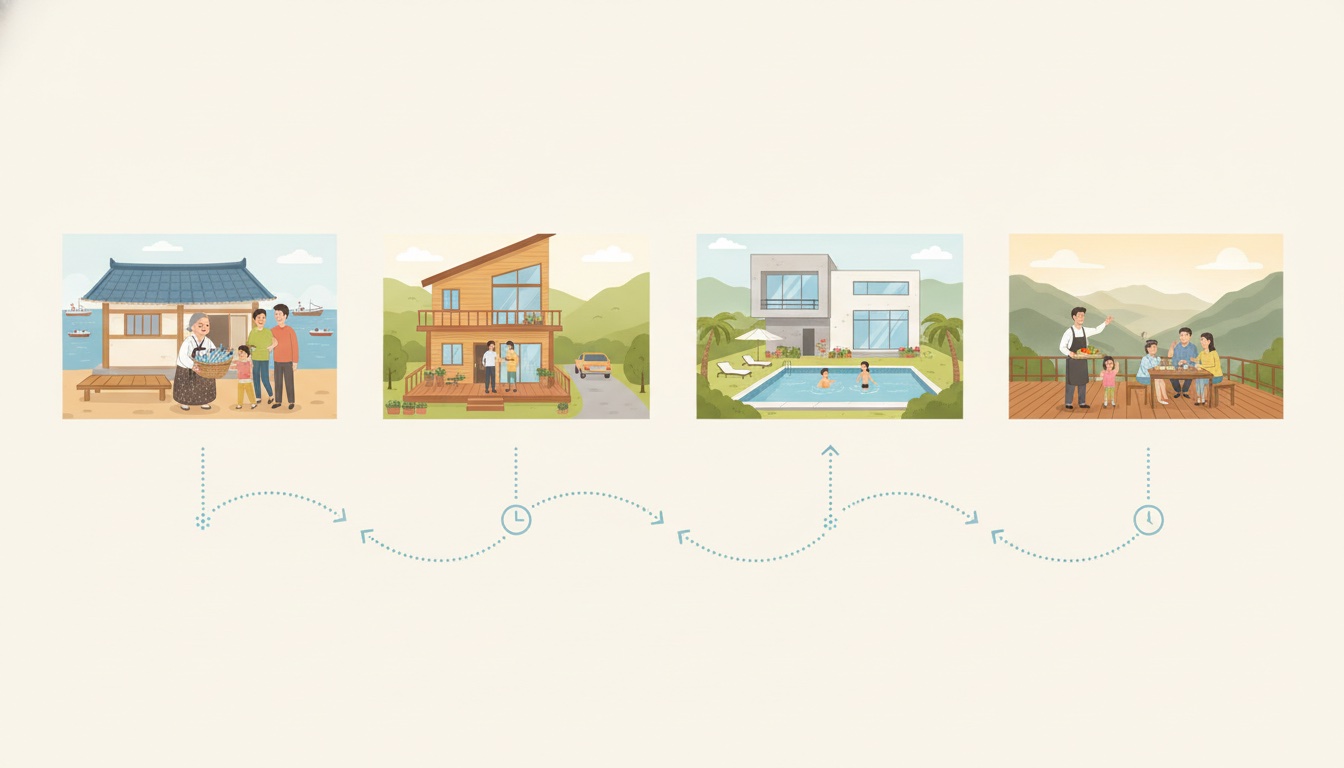
My family and I spent a summer holiday at a homestay near the West Sea. We played on the beach catching crabs until sunset, then my mother cooked a fantastic spicy fish stew from the few crabs we'd caught plus fresh fish the elderly landlady gave us.
Back then, nobody called places like that pensions. They were just minbak — homestays.
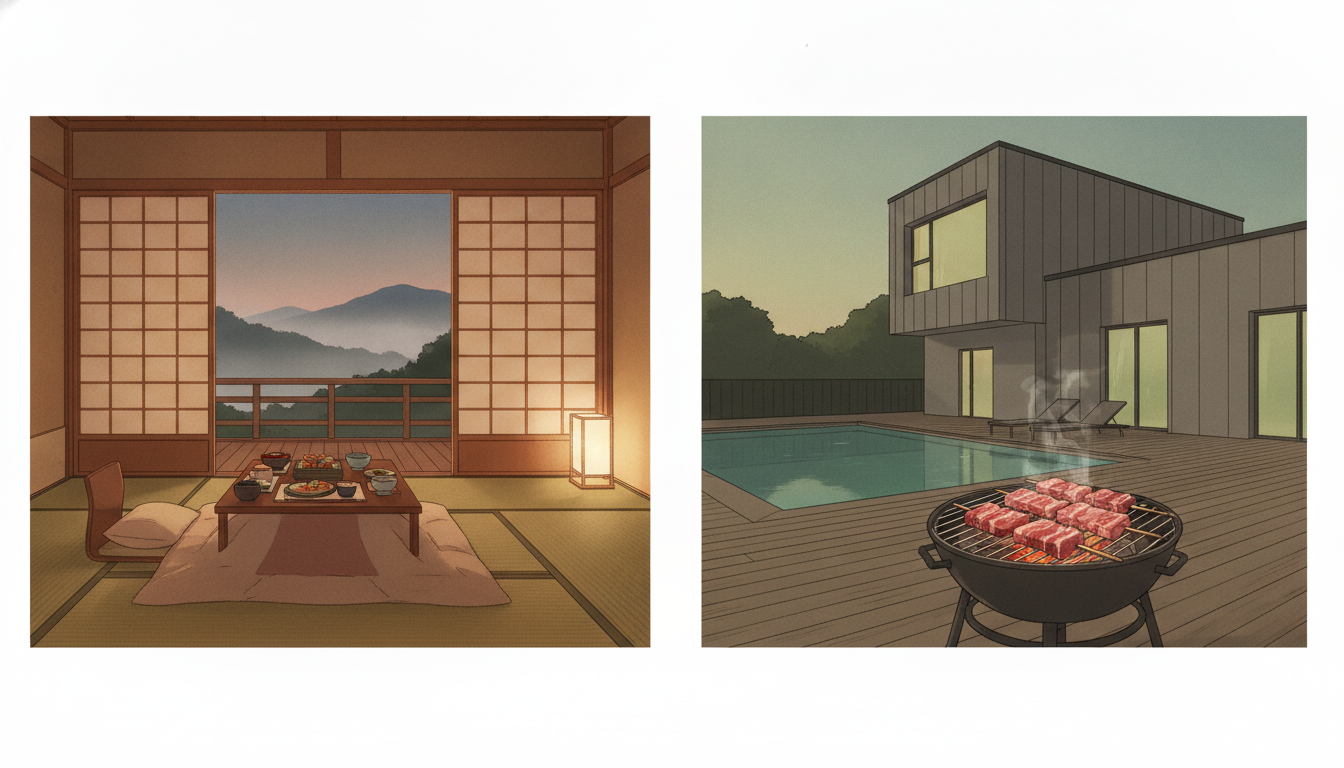
A few years later, signs reading "pension" started appearing in the same spots. Homestays that had been as warm but a little humble as that grandmother's house gradually got fancier. Timber-clad exteriors with terraces — houses that looked like European postcards — began popping up by the coast and in Gangwon-do, and before long pensions had taken root everywhere Koreans traveled domestically.
I never imagined that early encounter with pensions would become my line of work. In 2013, while running Hanintel, I launched a pension-search app called Pensionuro Twieora (Jump into a Pension) to expand from Korean homestays abroad into the domestic pension market (Edaily, Oct 16 2013). Later I ran Woori Pension as part of Yello Mobile's subsidiary Yello Travel Labs. Founded in 2004, Woori Pension was introduced as "Korea's largest real-time pension reservation service" when Yanolja acquired it in 2019 (Insight, Jun 3 2019). And as readers of this piece know, pension operators are the core customer base of the company I run now.
Last week, while catching up on news, one National Assembly item caught my eye. On October 1, an amendment to the Rural-Urban Exchange Act that reforms rural homestays passed the plenary session (Sukbak Magazine, Oct 2 2026). The bill covers big shifts — switching to a registration system, requiring public rate disclosure, introducing fines — but one sentence stood out:
"Breakfast may be included in the room rate."
The clause isn't actually new. Breakfast service at rural homestays has been legal since 2015 (Nongmin Newspaper, Jul 3 2024) — eleven years now. Yet I suspect the number of pension owners who've used it to serve guests a morning table can be counted on one hand.
What if pensions served breakfast?
30 years of the pension market: from homestays to pool villas
Pensions trace their roots to minbak. The 1995 Rural Development Act formalized rural homestays. The law defines them as lodging offered by local residents in their own homes "to boost rural income" (National Law Information Center, Rural Development Act Article 2). That was the setup — farm households renting out spare rooms to city guests. I suspect the homestay where the landlady gave my mother those fish fell under this scheme.
The name "pension" appeared a few years later. A 2002 daily introduced pensions as "leisure lodgings with ten or fewer rooms that combine the convenience of hotels with the family atmosphere of homestays," noting they'd sprung up organically over the previous two to three years — around 40 operating nationwide (Hankook Ilbo, Jun 3 2002). A year later, the count had reached 500 (Hankook Ilbo, Jun 25 2003).
The typical first-generation pension owner was a Seoul businessperson in their fifties who'd built a country house with retirement savings and rented out a few rooms (Kyunghyang Shinmun, Jul 9 2002).
In 2003 the Tourism Promotion Act Enforcement Decree created the "tourist pension business" category (eToday, May 31 2010), and from July 2004 the phased rollout of the five-day work week began. Families driving to Yangpyeong and Gapyeong on Friday evenings became the core clientele. Woori Pension launched that year as well.
For the record, "pension" is not a legal industry term. Even though establishments hang the same sign, they're registered under one of three categories: rural homestay, tourist pension business, or general lodging business — and a significant share are rural homestays. That's why this legislative change touches pension owners directly.
The 2010s brought smartphones, which upended the game. Reservations shifted from phone calls to apps, and pool villas with spas and swimming pools appeared. It was an era when a single photo could make or break a booking. I launched the Jump into a Pension app around this time so weekend travelers could browse pensions by photo.
COVID, starting in 2020, drastically reshaped the pension market. With overseas travel shut down in 2021, pension transaction volume jumped over 60% year-over-year; pool villas surged 120% (ONDA Accommodation Industry Index OSI, Newsis, Jan 27 2022). Small construction firms piled in, building and selling or operating pool villas themselves, and supply exploded.
Then the skies reopened and the boom ended. During the 2023 Lunar New Year holiday, domestic accommodation use in Korea fell 29% year-over-year while overseas accommodation use jumped 4,057% (Yanolja & Interpark, Financial News, Jan 30 2023).
Since then the pension market has faced rising supply and shrinking demand, making business tougher than before. As of September 2025, rural homestays numbered 36,001 — more than general lodging businesses (30,648) (Sukbak Magazine, Oct 30 2025).
Rising fuel prices and wars have brought some overseas travelers back to Korea (see part one on the balloon effect), but even within domestic travel, pensions aren't winning bookings. Their share of domestic travel accommodation dropped from 25% (2017) to 18% (2025), while hotels rose from 17% to 30% over the same span (Consumer Insight, Hankyung, Jan 22 2026).
When you have lots of rooms but fewer guests, your entire year hinges on a handful of peak-season days.
The image problem
Last summer a pension in Chuncheon charged KRW 1.4 million for a four-person room for one night. On the 17th, after peak season ended, the same room cost KRW 99,000 (SBS Biz, Aug 8 2025). The headline read: "This is why people go abroad."
In June of the same year, dishwashing became a flashpoint. When a Gangwon-do pension owner posted about a guest who'd reacted angrily to a checkout dishwashing request, comments piled up: "If you're going to make guests do the dishes, lower the room rate" (Dailian, Jun 11 2025). In October, a pension listed a KRW 37,000 'cleaning-free' option on a booking site — waiving checkout cleaning — and drew criticism: "Why should I pay extra for them not to clean?" (YTN, Oct 10 2025).
Lodging-contract damage-relief filings with the Korea Consumer Agency rose from 1,919 (2024) to 2,662 (2025) — up 38.7% (Kyunghyang Shinmun, Jun 19 2026). The figure isn't pension-specific, but it's hard to argue pensions are exempt from the trend.
Of course, I don't think this represents the majority of pension owners. Most of the owners I've met since the Woori Pension days genuinely welcome guests, tend their gardens, and press sikhye (sweet rice punch) and a homemade roll of gimbap into guests' hands at checkout.
But to potential customers encountering pensions through media, a single KRW 1.4 million rate and a single dishwashing demand stick vividly in memory. I wrote To stop price-gouging, fix the system for the same reason.
Pension owners need breathing room
So where did those caring pension owners from my memory go?
After interviewing many owners, my answer is this:
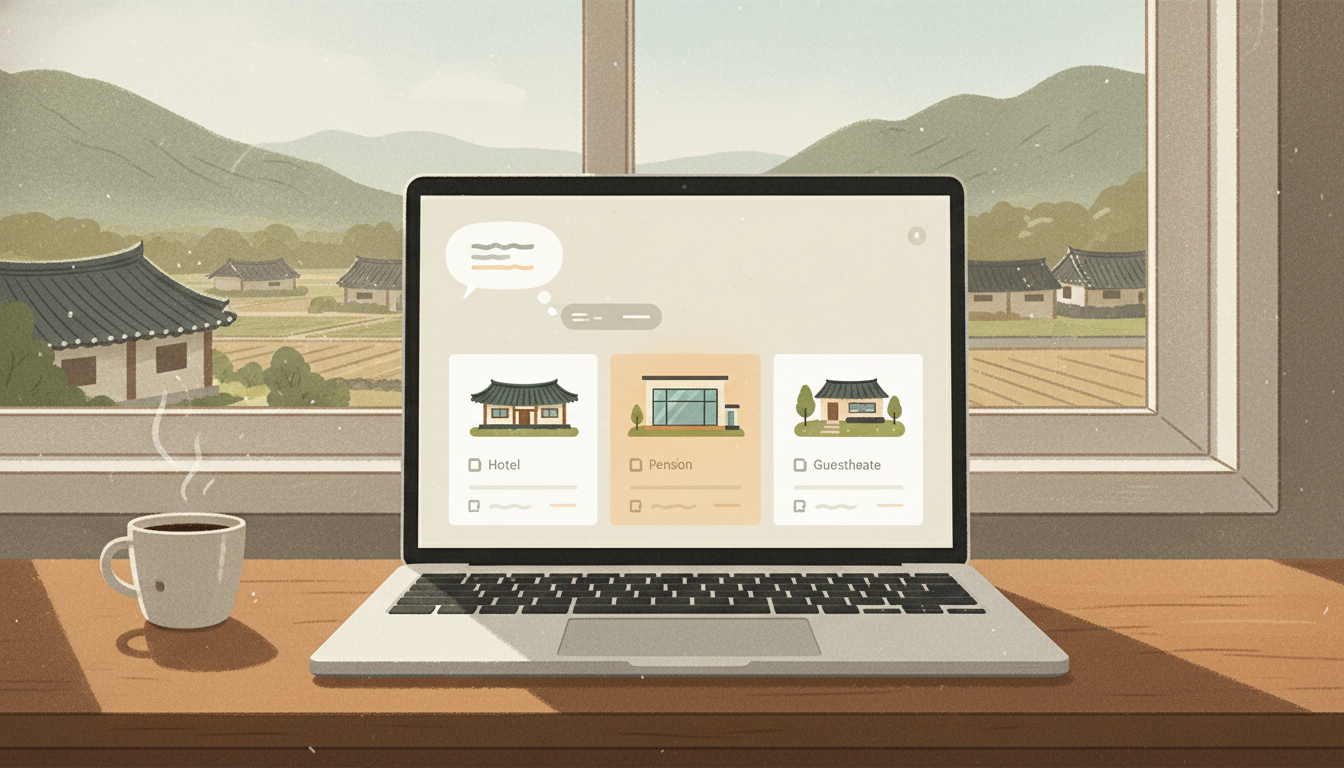
The channels guests use to book pensions have multiplied several times over the past decade. When pensions first appeared, you'd call after seeing the website a web agency built, and paper ledgers were enough. Then pension-specific booking sites like Woori Pension emerged. Now you have to manage Naver Booking, Yanolja, Yeogi Eottae, global OTAs, and Instagram — and even that isn't enough to fill empty rooms. Unlike hotels, pensions have just one unit of inventory per room type, so every new channel adds another calendar and rate sheet the owner must juggle. Woori Pension's core feature was a real-time reservation calendar that unified bookings previously handled by notebook and phone. More than a decade later, owners' calendars may actually be more complicated.
Then there's cost. Labor, utilities, building materials — all have risen sharply in recent years. Minimum wage alone climbed roughly 20%, from KRW 8,590 (2020) to KRW 10,320 (2026) (Minimum Wage Commission). On top of that are advertising fees and commissions to accommodation apps like Yanolja and Yeogi Eottae. Properties listed on accommodation apps spend an average of about KRW 1.07 million per month on advertising and pay an average 11.5% sales commission (Korea Federation of SMEs survey, Metro Newspaper, Jul 3 2024).
More channels mean more time on channel management and marketing; rising costs force you to cut staff. The work those people did falls squarely back on the owner. You're answering reservation calls, opening calendars on each channel, aligning inventory and rates, confirming deposits, lighting the barbecue charcoal, then after guests leave, changing sheets and cleaning yourself. At that point, there's little time or energy left for guests. (To the owners who still pour care into welcoming guests despite all this, I offer my sincere respect.)
The pension industry itself acknowledges: "Turnover has dropped, and since we can't afford separate cleaning companies, we ask guests to help out" (Dailian, Jun 11 2025). I think this is less an excuse and more an honest confession — even a lament — from a structure where revenue can't keep pace with rising costs.
When there's no breathing room, warmth is the first casualty, and that deficit in hospitality reaches guests directly. Cleaning shifts to guests; serving breakfast becomes unthinkable. Maybe price-gouging and forced checkout chores are less about character and more about structure and environment.
The Rural-Urban Exchange Act amendment: what changes for pensions
The amendment takes effect one year after promulgation, and operators who filed under the old notification system are automatically recognized under the new one. Four big changes pension owners should note (Sukbak Magazine, Oct 2 2026):
- The barrier to entry drops. The system shifts from notification to registration, and prior-residence and homeownership requirements are lifted. You can run a homestay without owning the property. Standard rural homestays still require the operator to live there. The bigger shift is the new 'vacant-house regeneration homestay' category: if you use a house vacant for over a year, local-resident and residency requirements don't apply, and municipalities, SMEs, and nonprofits can operate them.
- Rates must be transparent. You must post your registration certificate and rate sheet not only at the property but also on your website and SNS, and you must adhere to rates filed with local government. Cancel a reservation unilaterally and resell the room at a higher price, and you face a fine up to 50 times the resale amount.
- Regular inspections become mandatory. Annual service, hygiene, and fire-safety training plus electrical and gas inspections are required, and you must carry insurance or mutual-aid coverage.
- You can sell breakfast. Breakfast may be included in the room rate. Other meals can be served to guests if you obtain a food-service business permit and meet facility standards.
The toughest piece on the ground will likely be #2. Rates must align across your website, SNS, multiple booking apps, and the amount filed with local government. We'll have to wait for the enforcement decree, but the current manual-editing-across-channels approach won't cut it.
Yet I think #1 is the bigger shift.
Rural homestays began as a side business for local residents — a scheme to boost farm income. This amendment tilts the balance a bit toward tourism product. It carves out rural homestays as a separate business domain, revives vacant houses as lodging, and manages rates and safety closer to how tourist accommodations are regulated.
Going forward, two types of operators will formally compete in the pension market. On one side: the classic pension owners we know — people who finished their careers and used retirement funds to build a country house and settle into that land. On the other: professional management companies that rent or buy vacant houses in the area and operate multiple properties as a bundle. Plenty of such firms exist already, but now they can participate within a legitimate legal framework.
Capital-backed management companies will likely outperform individual pension owners on photos, pricing, and channel management, and they'll have economies of scale. So what weapon can existing owners wield in this competition?
Authentic hospitality. Jeong — warmth. Only someone who actually lives on that land, cherishes it, and genuinely cares for guests visiting the area can offer jeong. A lovingly prepared breakfast spread, a handwritten note, a cup of welcome tea at arrival, a packet of local specialties pressed into guests' hands at checkout. The sikhye and gimbap those owners used to give guests as they left. A management firm can mimic it with a manual, but replicating the personal touch and story of someone who lives in that house is another matter.
The 20-million-tourist era: what pensions should be selling
Foreign tourists are already heading to the regions. This summer, Trip.com bookings for train travel within Korea by foreign visitors jumped 161% year-over-year; the Seoul–Gangneung route surged 415% (Maeil Business, Jul 26 2026). As first-half arrivals climbed to 10.71 million (up 21.3%), the industry is saying, "Plenty of foreigners are visiting the regions, but there aren't enough suitable lodgings" (Hankyung, Aug 29 2026).
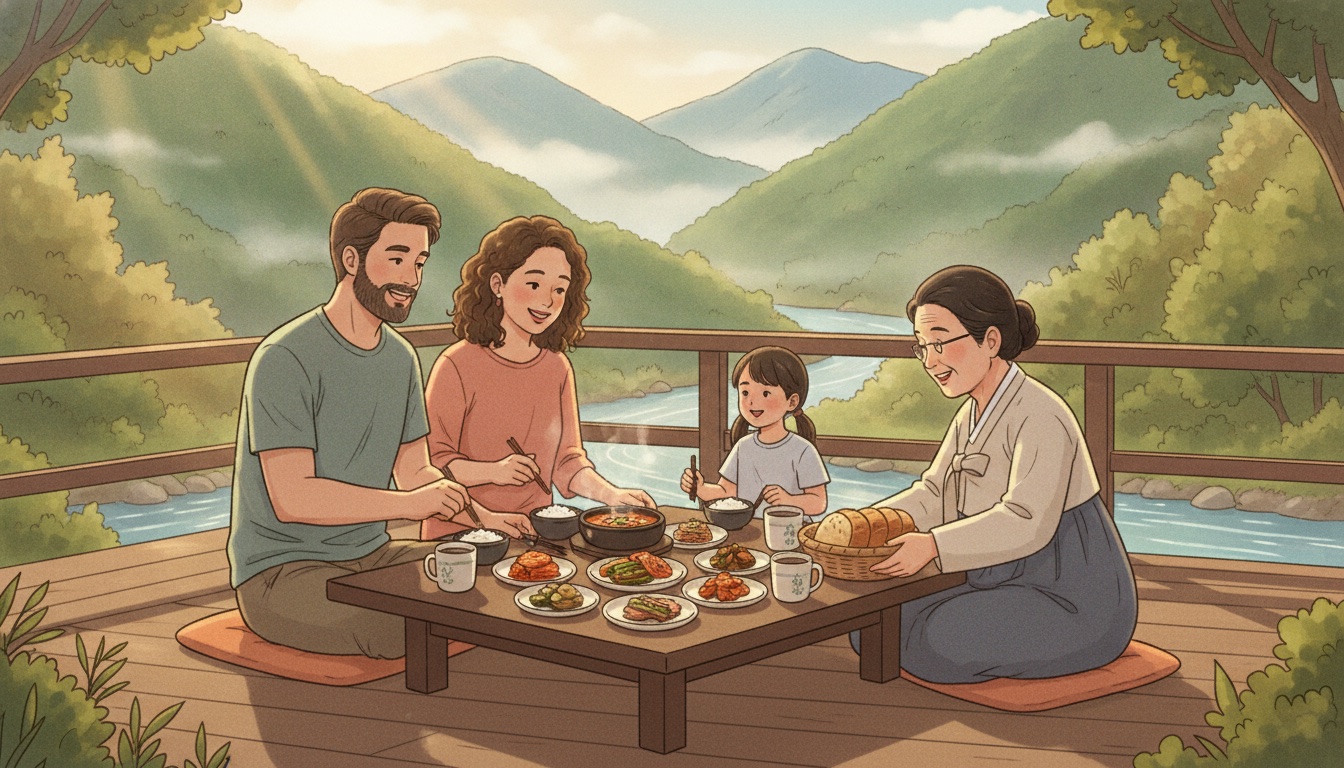
I believe pensions can fill that 'suitable lodging' gap. As I wrote in a recent piece, if a Namhae pension offered Korean cuisine as content, a room rate of several hundred thousand won wouldn't feel steep. The starting point could be a simple but heartfelt breakfast.
Funny enough, "pension" originally meant a place that comes with meals. In French, pension complète means lodging with three meals; demi-pension means lodging with breakfast and dinner. Britain's B&Bs literally put breakfast in the name.
You don't need fancy. Bread from the town bakery that morning, soybean-paste soup made with local tofu, a few vegetables from your garden — that's enough. Just as the fish from the West Sea landlady became an unforgettable memory for my family, that morning becomes a foreign guest's indelible Korean breakfast.
So owners can focus on hospitality alone
But to prepare that breakfast, you need time in the morning.
That's why I tell owners: hand off channel management and marketing to good software. Scattered reservation calendars across channels, rate sheets, payment confirmations, notification texts — a channel manager and property-management system (PMS) handles these more accurately than a person. The amendment's transparency and rate-compliance requirements are far easier to manage on a single system. Even checkout cleaning, which you've been asking guests to do — if there's a cost, fold it transparently into the rate. That's better for everyone.
Invest the time you save into the essence of hospitality. Satisfied guests return on their own, and the reviews they leave bring new guests. What you should be building now is an environment where you can focus on hospitality and guests still find you — and revenue still grows.
This story becomes even more important in the AI era.
Pensions are non-standard properties. Hotels can be described mostly by standardized data: room type, floor space, bed count. A pension's charm doesn't fit that mold. The terrace overlooking a valley, the bread the owner bakes every morning, the lawn where dogs run free, the local specialties guests take home at checkout — these don't squeeze into an OTA's fixed input fields. So pensions listed on OTAs often get compared only by price and a handful of photos.
That uniqueness shines when you put it on your property's homepage in a way AI can read well. Already 36% of Korean travelers plan trips using AI (Agoda survey; see How to get your hotel recommended by AI). When someone asks, "A quiet valley pension for kids that serves breakfast," AI will suggest your property only if that fact is written where AI can read it. Guests who arrive knowing your sharp differentiators experience exactly what they expected and leave highly satisfied.
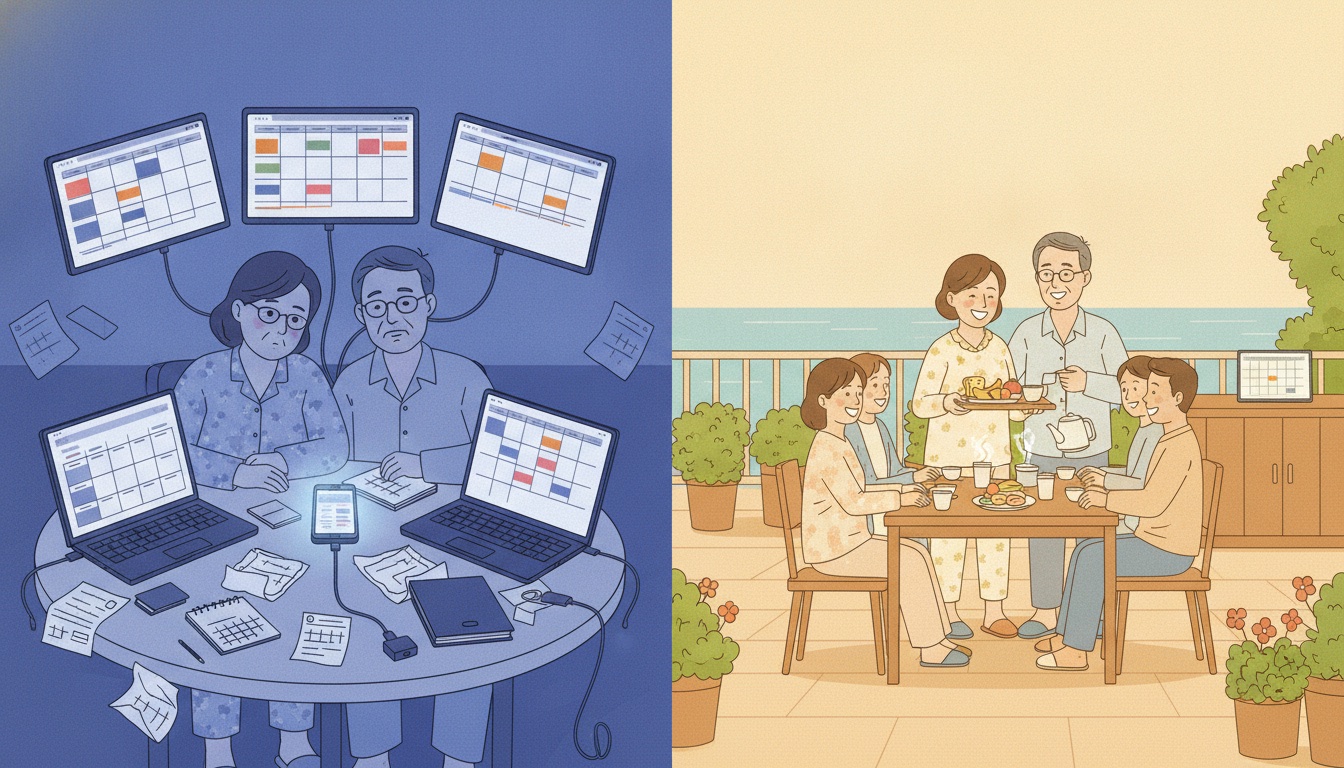
The company I run, ONDA, uses ONDA Plus and a channel manager to unify owners' scattered calendars and rates so they move from one place, and we help booking-engine homepages become readable and recommendable by ChatGPT and Gemini. Technology can't be hospitable on an owner's behalf, but we're building our service with the mindset that we can at least give you a little breathing room to share warmth.
Back to that homestay
I don't remember what the room at that West Sea homestay looked like. But the beach where we caught crabs until sunset and the pot of spicy fish stew my mother made with the landlady's gift — those come back like a scent every time I visit the sea, a beautiful memory.
Weren't pensions supposed to sell memories like that in the first place?
I hope one day a foreign family receives a breakfast spread at a pension on the West Sea or in Gangneung and returns to Korea because of that morning. And I want to help make sure that breakfast stays in their memory for a long time.
Hyunseok Oh | CEO, ONDA — 18 years in hospitality